

As a graduate student, I designed and created several multimedia items, including a podcast, an instructional tutorial, an infographic, and an interactive instructional multimedia presentation. The objectives for these projects were to be mindful of time and to solve a problem through instruction. The intended audience for these projects was speculative, and I selected topics that learners could apply immediately after instruction and revisit for future reference.
Also included are three instructional videos I created for the STRIDE design project at Middle Tennessee State University.
Socially Responsible Podcast
In this podcast, I speak with citizens of Rutherford County, Tennessee, about recent changes to the county’s recycling procedures. Rutherford County has recently transitioned from segregated item collection to single-stream collection. The lack of a coordinated and widespread information campaign regarding this change frustrated many residents.
The intent of this podcast was to acknowledge that frustration while also offering solutions on how to stay informed and recycle correctly.
- Client: Citizens of Rutherford County, Tennessee
- Audience: Adults, aged 18-99
- Timeframe: 2 weeks
- Podcast was scripted, narrated, and edited by me using Adobe Audition for recording and postproduction. Sounds and sound items were found on FreeSound.com. Credits can be accessed here.
Two versions are available with different music beds. Content does not differ.
A Funny Thing Happened on the Way to the Recycling Center (Version 01)
A Funny Thing Happened on the Way to the Recycling Center (Version 02)
This project highlights my skills in multimedia creation, graphic design, and adult learning theories.
AECT Standards:
- AECT Standard 1: Content Knowledge (1.2) – I utilized technological resources to enhance learner engagement and content retention.
- AECT Standard 3: Learning Environments (3.1) – I designed an instructional and informational podcast based on multimedia principles.
- AECT Standard 5: Research (5.1) – This standard is met by applying research-based theories to develop an effective and informative listening experience.
How Did I Get There? Using Microsoft Steps Recorder
I was helping my dad try to remember how he had gotten to a particular setting on his computer. I had recently learned about the Microsoft Steps Recorder, a free tool in Windows 10, and I thought it would be fun to make an instructional video on how to use the steps recorder to record your steps for the hard-to-remember and difficult-to-find settings on Windows.
- Client: Unspecified
- Audience: Adults, aged 18-99
- Timeframe: 1 week
- Video was scripted, narrated, and edited by me using Camtasia for screen recording and video manipulation, Adobe Audition for recording narration and audio postproduction. Sounds and sound items were found on FreeSound.com. Credits can be accessed here.
This project highlights my skills in multimedia creation, graphic design, and adult learning theories.
AECT Standards:
- AECT Standard 1: Content Knowledge (1.2) – I utilized technological resources to enhance learner engagement and content retention.
- AECT Standard 3: Learning Environments (3.1) – I designed an instructional video based on multimedia learning principles.
- AECT Standard 5: Research (5.1) – This standard is met by applying research-based theories to develop an effective and informative audio-visual presentation.
Single Stream Recycling Infographic
A project for IT 573 was to create an infographic which tells a simple story that solves a problem through instruction. I chose to tell the story of single-stream recycling and how to identify and sort eligible items. The objective was to use images to convey the information with minimal use of text.
- Client: Citizens of Rutherford County, Tennessee
- Audience: Adults, aged 18-99
- Timeframe: 1 week
- Infographic was designed in Canva. Some images were further refined in Adobe Photoshop. Narrative and strategic choices were mine based on single-stream recycling procedures posted by Rutherford County Government division of Solid Waste.
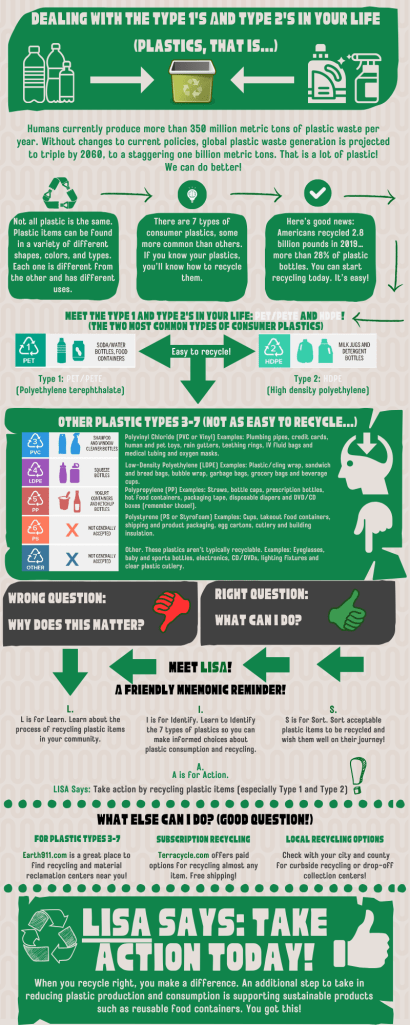
This project highlights my skills in multimedia creation, graphic design, and adult learning theories.
AECT Standards:
- AECT Standard 1: Content Knowledge (1.2) – I utilized technological resources to enhance learner engagement and content retention.
- AECT Standard 3: Learning Environments (3.1) – I designed an instructional infographic based on multimedia learning principles.
- AECT Standard 5: Research (5.1) – This standard is met by applying research-based theories to develop an effective infographic for learner application.
STRIDE Tutorial Videos
The following instructional videos were created for the STRIDE instructional design project for Middle Tennessee State University Online Learning division.
The objective of these videos was to provide a comprehensive visual walkthrough to accessing, navigating, and using the features of the Brightspace Desire2Learn LMS.
- Platform: YouTube, embedded in Brightspace Desire2Learn
- Client: Middle Tennessee State University Online (MTSU Online)
- Audience: Undergraduate students, aged 18-25
- Timeframe: 1 Week
- Videos were recorded using Camtasia with postproduction and additional visual effects using Adobe Premiere. Still images were captured using SnagIt.
This project highlights my skills in the ADDIE framework, adult learning theories, graphic design, and multimedia creation.
AECT Standards:
- AECT Standard 1: Content Knowledge (1.1 and 1.2) – I leveraged technology to enhance learner engagement and content retention.
- AECT Standard 2: Content Pedagogy (2.1, 2.2, and 2.4) – This project integrates educational technology to foster a flexible and accessible learning environment.
- AECT Standard 3: Learning Environments (3.5) – In developing this project, I adhered to copyright guidelines and regulations in the use of instructional materials.
 Andrew F. Rosbury